
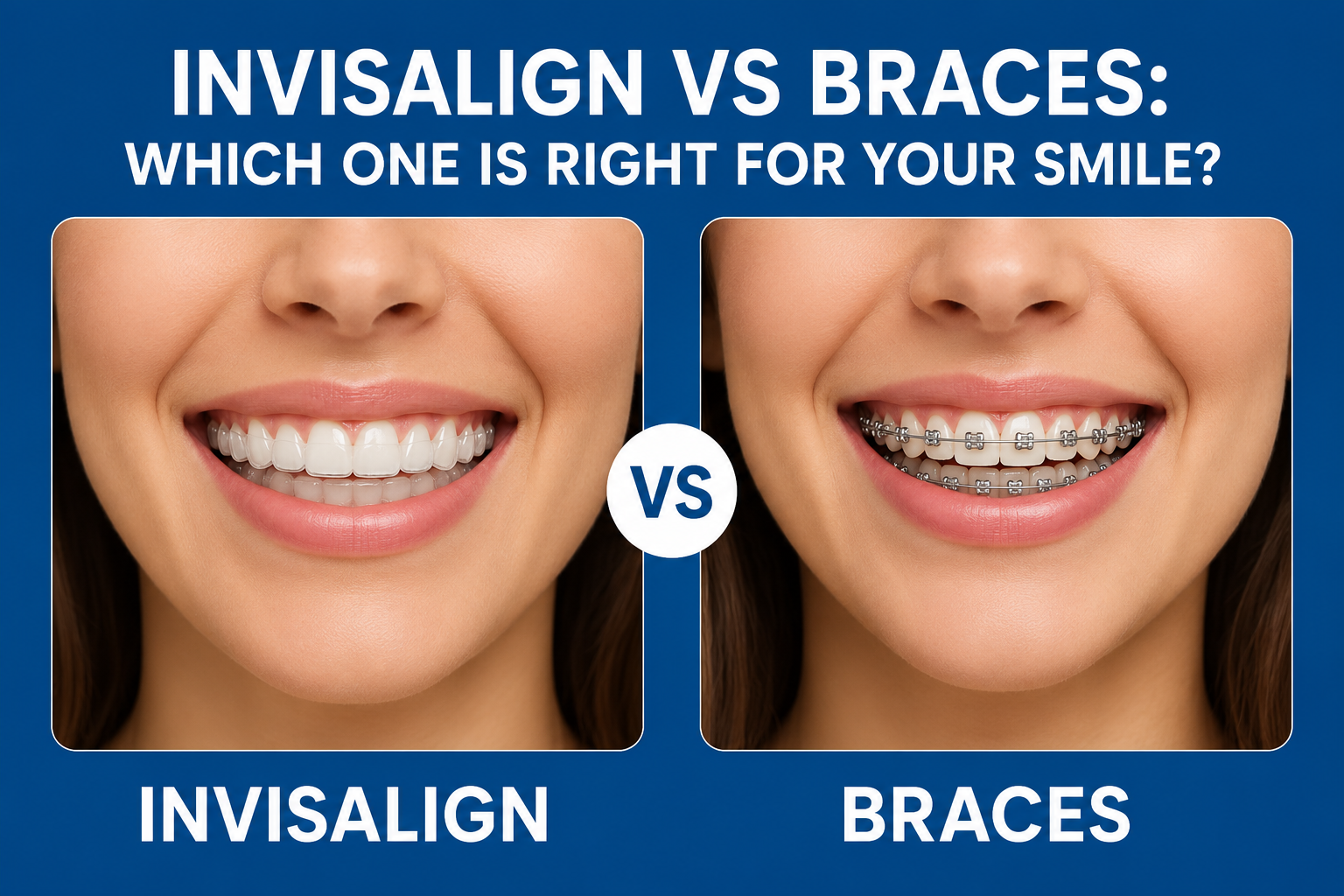
Which clear aligner option is right for you? A side-by-side look at cost, comfort, and timeline — so you can choose with your eyes open, not just your Instagram feed.
You’ve decided you want straighter teeth. Maybe it’s a crooked front tooth that bothers you every time you see a photo of yourself, or a bite that’s started to feel a little off. Either way, you’ve landed on the same question almost every adult patient asks us at Del Sur Dentistry: should I get Invisalign, or should I get braces?
It’s a fair question, and it’s more complicated than “clear is better than metal.” Cost, comfort, treatment time, and the complexity of your bite all factor into which option will actually get you the smile you want — without surprises along the way.
This guide breaks down exactly how Invisalign and traditional braces compare, what each treatment really costs in San Diego, and how to figure out which one fits your teeth, your lifestyle, and your budget.
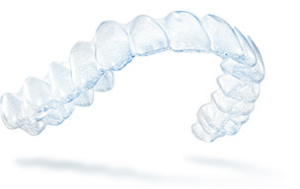
What Are Invisalign & Clear Aligners?
Invisalign is a series of custom-made, removable clear plastic trays that gradually shift your teeth into their correct position. Instead of tightening wires like traditional braces, you switch to a new, slightly different tray every one to two weeks. Each tray nudges your teeth a fraction of a millimeter closer to your final smile.
A few things set Invisalign apart from other orthodontic options: it’s nearly invisible — most people won’t notice you’re wearing it unless you tell them; it’s removable, so there’s no special diet or awkward cleaning routine; and it’s custom-fit from a digital scan of your teeth, so you can preview your projected result before you start. Invisalign is the most recognized brand in this category — ClearCorrect and Candid use similar technology, but experience and oversight from your provider matter more than the label on the box.
Side-by-Side Comparison
| Factor | Invisalign | Traditional Braces |
|---|---|---|
| Appearance | Nearly invisible | Visible metal or ceramic |
| Comfort | Smooth plastic, minimal irritation | Wires/brackets can rub |
| Removable | Yes, for meals & cleaning | No, fixed for full treatment |
| Diet | No restrictions | Avoid sticky, hard, chewy foods |
| Cleaning | Brush & floss normally | Special tools around wires |
| Treatment time | 4–24 months | 18–24 months |
| Cost | $3,000–$8,000 | $3,000–$7,000 |
| Office visits | Every 6–8 weeks | Every 3–5 weeks |
| Best for | Mild–moderate cases, teens+ | Mild–severe cases, all ages |
| Compliance | High — 20–22 hrs/day wear | Some required — always on |
At a glance, both treatments move teeth effectively and, in most cases, land you in a similar cost range. The real difference comes down to how the treatment fits into your daily life — and whether your case is straightforward enough for aligners to handle.
Weighing Your Options
- Virtually invisible — a real advantage for client-facing work and everyday confidence.
- Removable for eating and cleaning — no food restrictions or special flossing tools.
- More comfortable day to day — no wires or brackets, no mouth sores.
- Fewer office visits — check-ins every 6–8 weeks.
- Requires discipline: 20–22 hrs/day or treatment slows down.
- Trays are easy to misplace since they’re removable.
- Not ideal for severe bite or rotation cases.
- Handle complex cases — nearly any alignment or bite issue.
- Some compliance risk — fixed to your teeth, working 24/7.
- Often less expensive for complex cases vs. added aligner refinements.
- Well-suited for children and teens.
- Highly visible — often the biggest drawback for adults.
- Can irritate cheeks and lips, especially after adjustments.
- Diet restrictions and harder daily cleaning.
Cost & Financing
$3.0–8.0K
$3.0–7.0K
30–50%
Payment plans are available for both treatments at most dental offices, including Del Sur Dentistry, so total cost can be spread across the course of treatment. Complex Invisalign and traditional orthodontic cases may need additional refinement beyond the original plan. Long-term value is comparable: both options straighten teeth permanently when paired with a retainer.
Which Is Right for You?
There’s no universal right answer — but these questions narrow it down fast.
The most reliable way to answer these is a consultation where your bite is actually evaluated — case complexity is the single biggest factor in which treatment gets you the best result.
Invisalign at Del Sur Dentistry
Dr. Roxana Ramezani is our practice’s primary Invisalign provider — every case starts with a custom digital treatment plan built around your bite, not a one-size-fits-all protocol. If you’re in Del Sur, 4S Ranch, or Rancho Peñasquitos, let’s look at your case together.
14701 Via Bettona #215, San Diego, CA 92127
Frequently Asked Questions
How much does Invisalign cost?
Invisalign typically ranges from $3,000 to $8,000, depending on case complexity and how many aligner trays your plan requires. Many dental insurance plans cover a portion of orthodontic treatment, and payment plans can spread the cost over time.
Is Invisalign painful?
Invisalign is generally more comfortable than braces since there are no wires or brackets to irritate cheeks and lips. Mild pressure for a day or two after switching trays is normal and fades quickly.
Can adults get Invisalign, or is it only for teens?
Invisalign is especially popular with adults because it’s discreet and fits professional and social settings without the visibility of metal braces. Adults make up a large share of Invisalign cases nationwide.
What happens if I don’t wear my aligners enough?
Skipping wear time slows progress and can require adjusting your treatment plan. Consistency — 20 to 22 hours a day — is what makes Invisalign as predictable as traditional braces.